The following is just a possible itinerary:
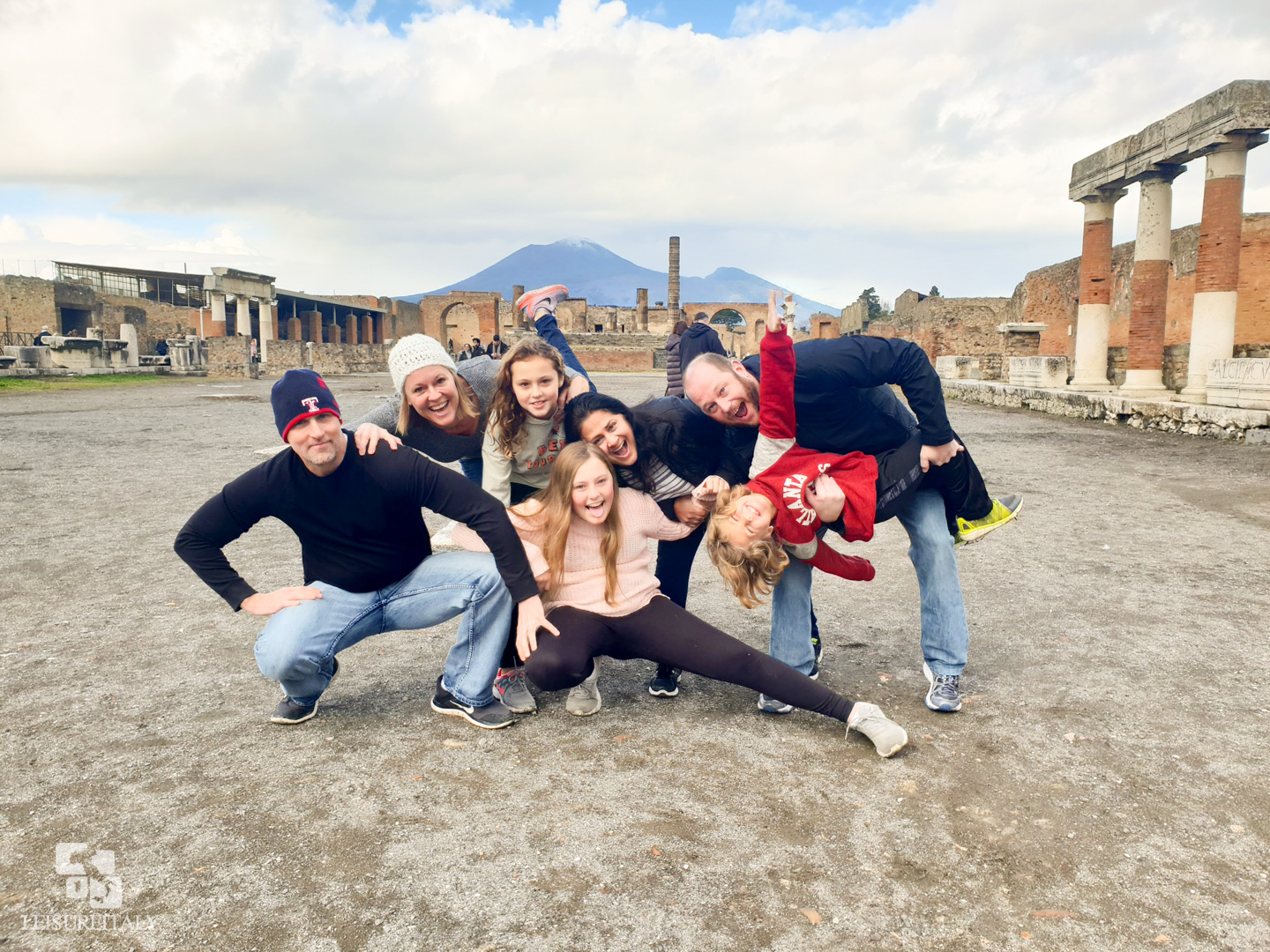
The Site of Ancient Pompeii sits in the Bay of Naples between Naples, Salerno, and Sorrento. Along the road, you can see and feel the towering presence of Mt Vesuvius. You will enjoy views of the Bay of Naples and its islands. Across the Bay stands Cape Misenum, where the Roman Military Navy was based. From this position, on 79 CE, Pliny the Younger described the famous eruption that buried Pompeii and the surrounding towns.
This is a suggested itinerary for our optional private guided walking tour of Pompeii, if you choose to explore the archaeological site with our professional guide. Our guided walking tour focuses on the Highlights of Pompeii. It adapts interests and walking attitude of the participants. Be aware there is some walking uphill and some steps. For those not willing to take the entire walk, there are some cafés and gift shops outside the entrance.
In Pompeii, you will first admire the city walls, dating back to the pre-roman Pompeii (4/5 centuries BC). One of the best-preserved ancient gates is called Porta Marina. It connected Pompeii with its port, with a path for charts and one for people.
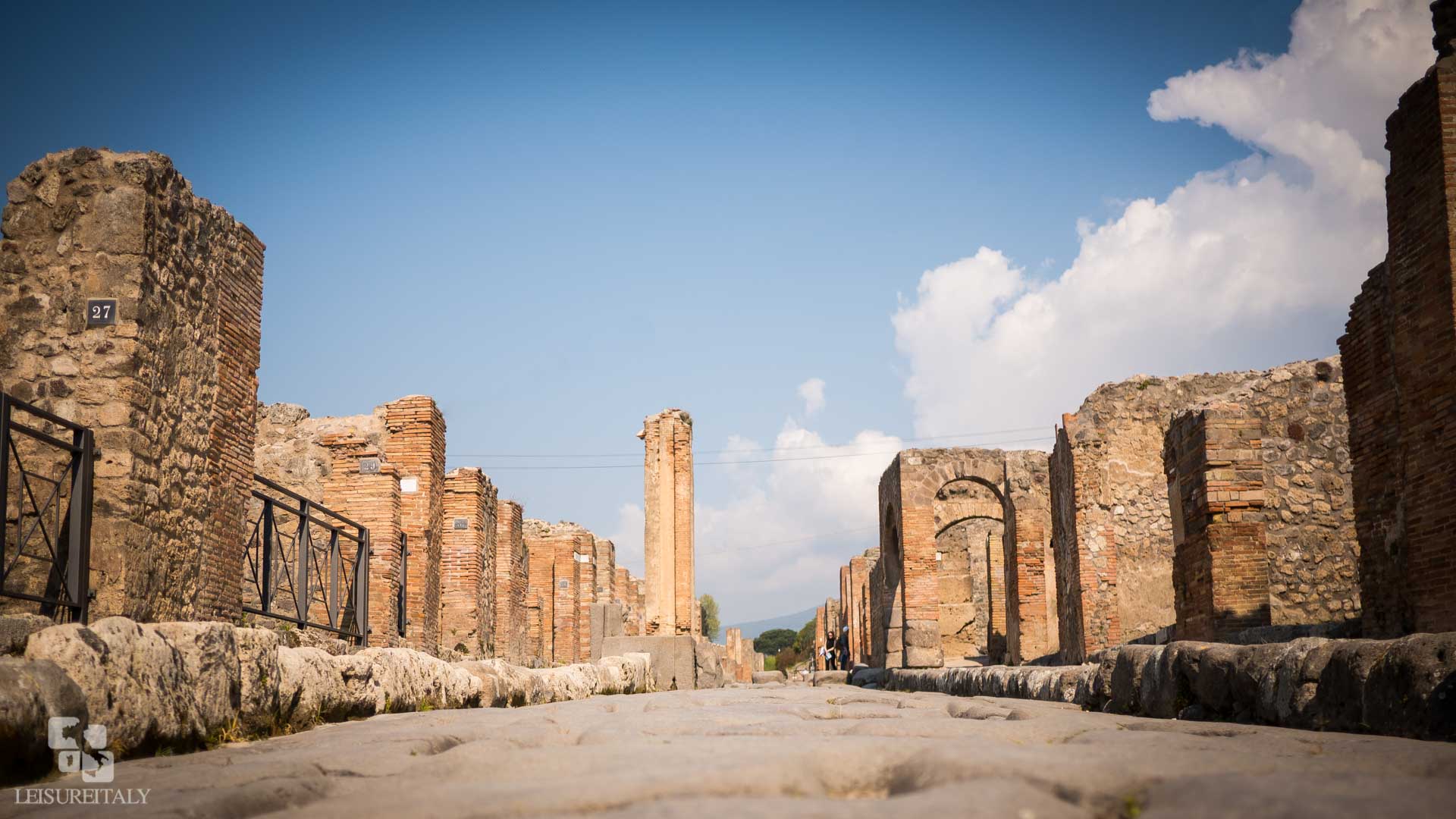
Once in town, you will be walking on the original road made of volcanic stone. You will notice on the ground hundreds of little white spots made of travertine used to reflect torchlight (nowadays “cat’s eye” on the driving roads).
Your attention will be captured by big blocks of basalt emerging from the road: they were stepping stones used by pedestrians to avoid getting wet when it rained; in fact, unlike other Roman towns, Pompeii didn’t have a complete sewer system because the city was built on top of a lava platform that was too hard to work with.
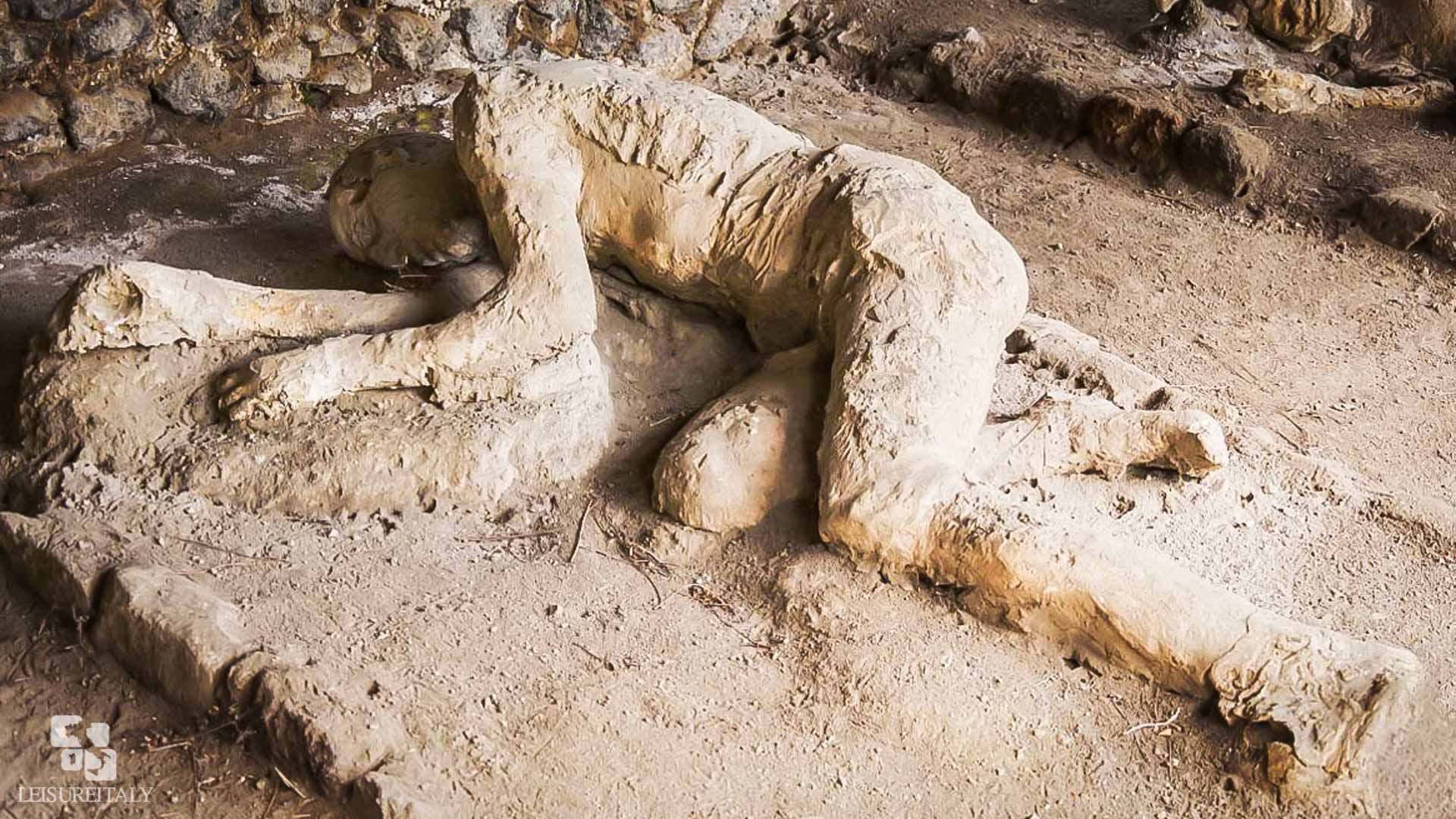
The city centre is called Forum. It hosts all the buildings with a public function: Religion (the Temple of Apollo, the Capitolium and the Temple of the Emperor), Trade (the meat and fish market called Macellum, the textiles market headed by a priestess named Eumachia), Administration (the Basilica) and Politics (Comitia). Other facilities in the Forum included exchange offices, public restrooms and a public scale (tabula mensurae) aimed at comparing and weighing farmers’ products. In the Forum, you may also see a display of the famous human casts.
Close to the Forum were public Bath-Houses where both men and women (in different sections), poor and wealthy, free persons and slaves could access daily hygiene. Pompeii had three such complexes within the city and two others right outside of it. Each Bath-House had the following facilities: a changing room (apodyterium), a tepid room (tepidarium), a hot room (calidarium) and a Gym (Palestra).
You will notice several places fronting the road with large vases built in a masonry counter: this is what the Romans called popinae, today’s inns! These jars were full of food and beverages, and many ancient Pompeians would stop in such places for lunch.
You will recognise some of the Bakeries of Pompeii, with their ovens and grinding machines: incredible but true, some round carbonized loaves of bread were found during the excavations. Remains of ancient food, such as almonds, pine cones, figs, lentils, etc, have been discovered during excavations, but are seldom on display due to preservation reasons.
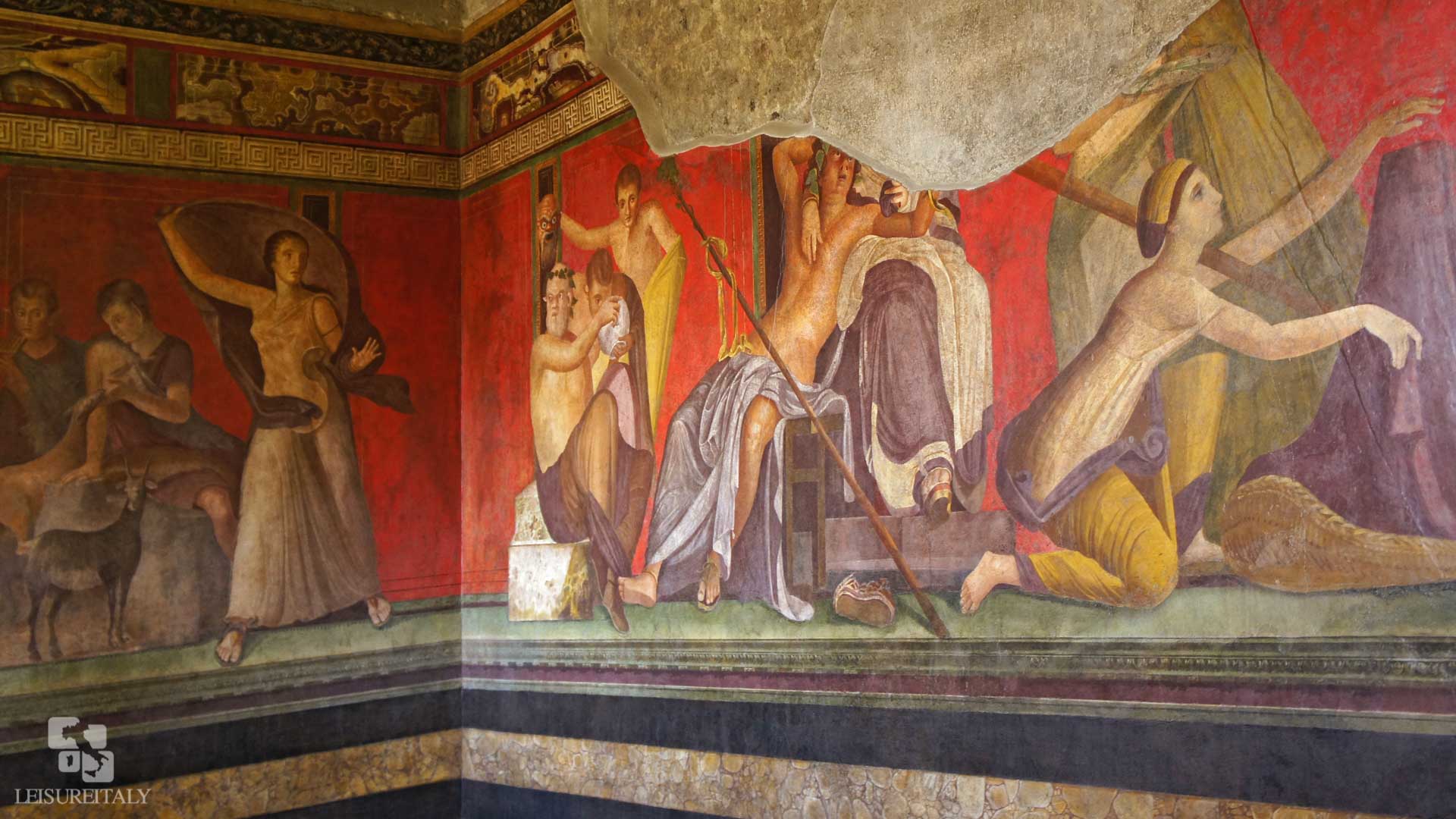
Upon request, your visit can include the infamous Lupanare (Brothel): it displays Roman frescoes featuring erotic images!
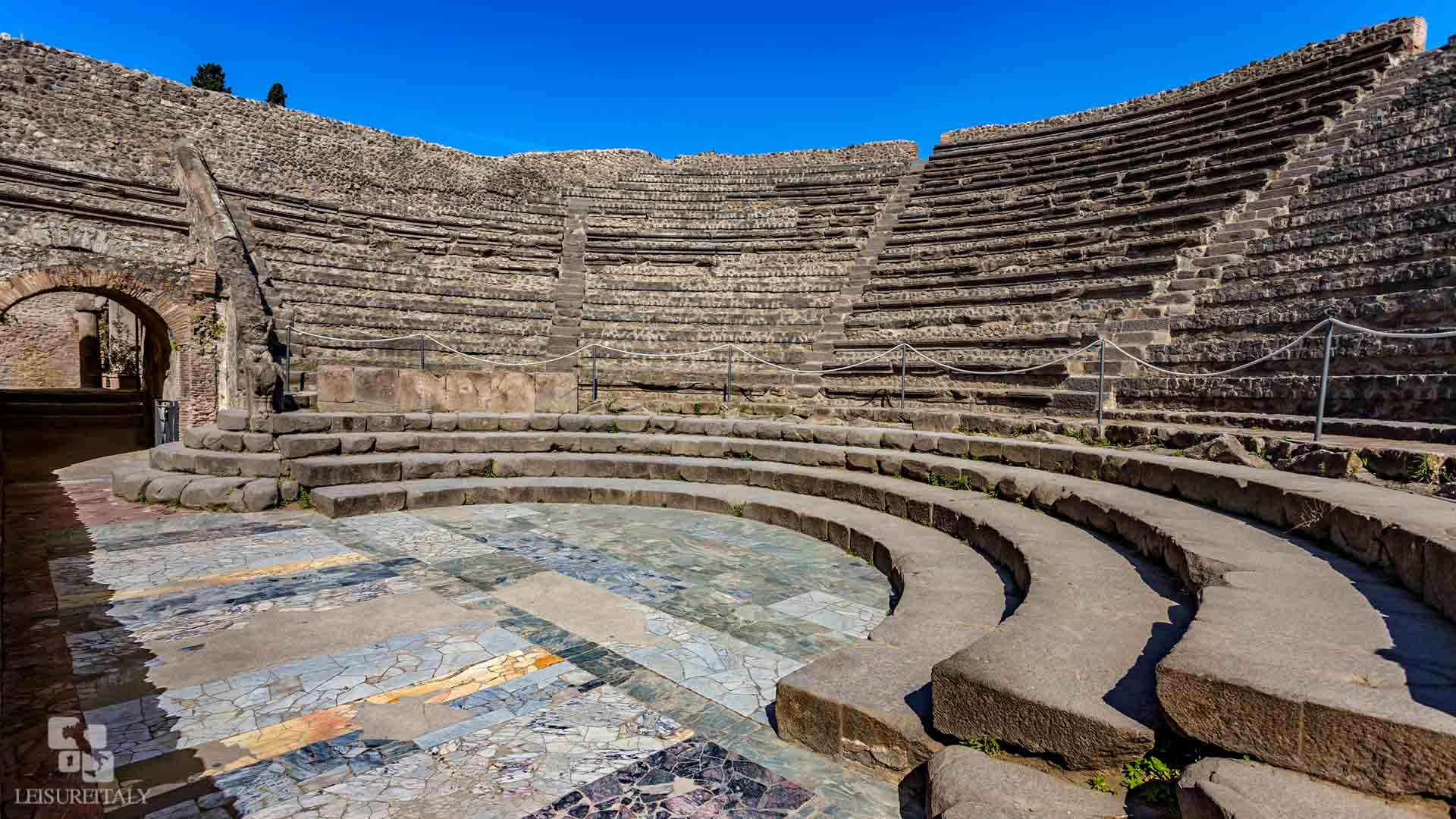
Do not miss the chance to discover Pompeii’s areas for public performances. There is an outdoor Theatre (for comedy and tragedy), an indoor theatre (Odeion, for mimes and declamation of poetry) and an amphitheatre (for games like gladiator fights or game hunting). You shall visit at least one of those places.
On request, the tour can also include the small but wonderful museum (Antiquarium), featuring finds from the excavations, as well as plaster casts made of the ancient Pompeians.
Pompeii is too big to visit entirely in a day. Leisure Italy will make sure you see the highlights. Our optional guided tour aims to visit an example of each building type.
After the tour at Pompeii, you could stop for a few minutes for a fresh-squeezed orange juice or to browse the souvenir shops if you wish.
On your Private Tour of the Amalfi Coast, you will drive through several charming villages: Sorrento, Positano, Amalfi, Ravello, etc.
The time you can spend in each depends on your choice. Leisure Italy recommends choosing one or two towns maximum, to avoid being rushed all day. Please be aware: the driving time from the Amalfi coast back to Naples can be up to 2 hours. The tour is flexible anyway, and you can personalise the itinerary as the day goes by.
After Pompeii, the tour will move on to the Sorrento Peninsula, with some beautiful landscapes on your right-hand side. Along the way, your private driver will stop so you can take pictures of the scenic views.
Sorrento is our choice for shopping and lunch opportunities. It is famous for its “limoncello” production – an alcoholic lemon liquor that you can taste mostly anywhere in town. Not to miss is the overview of the Bay of Naples from the Garden of St-Francis.
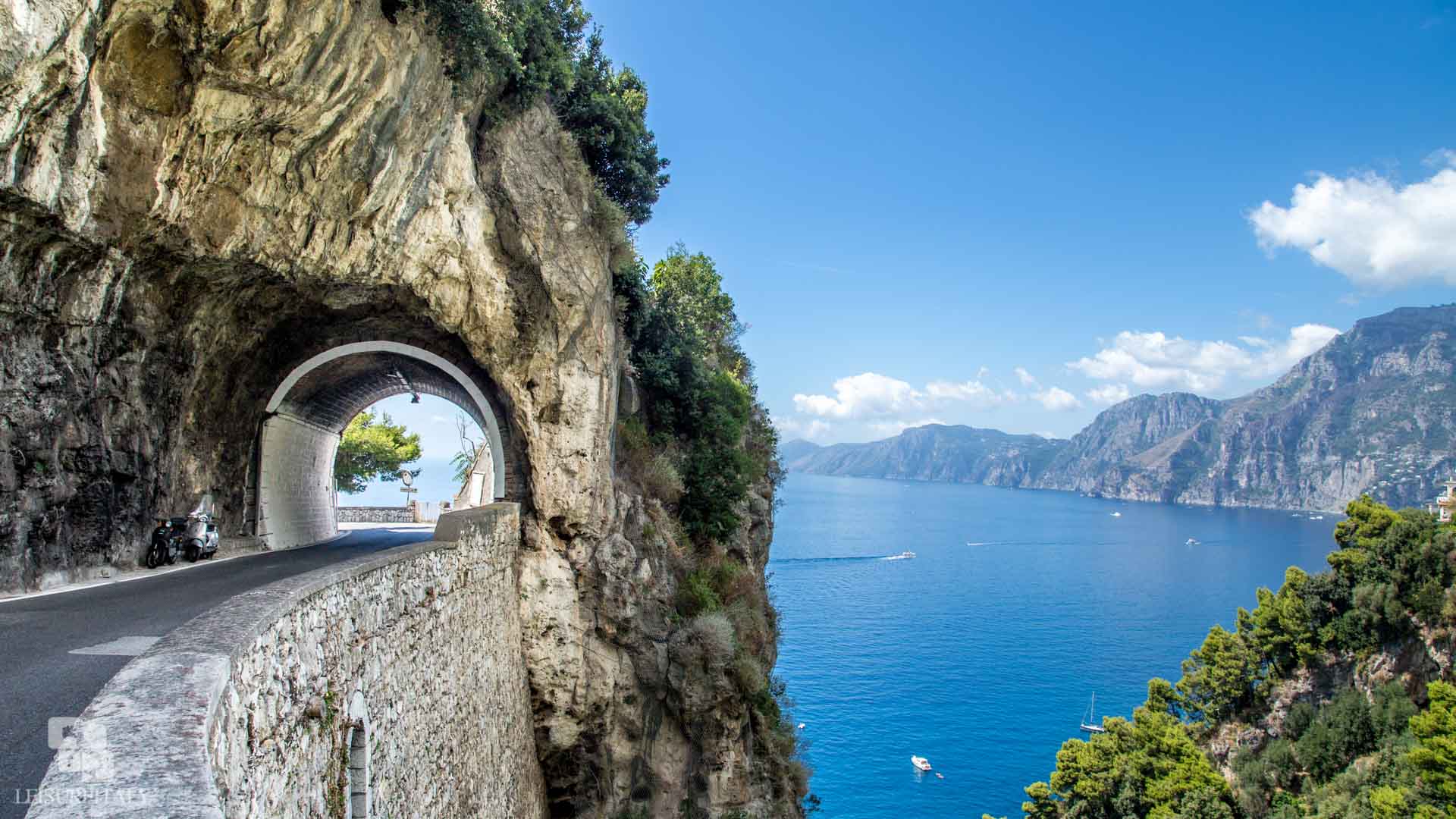
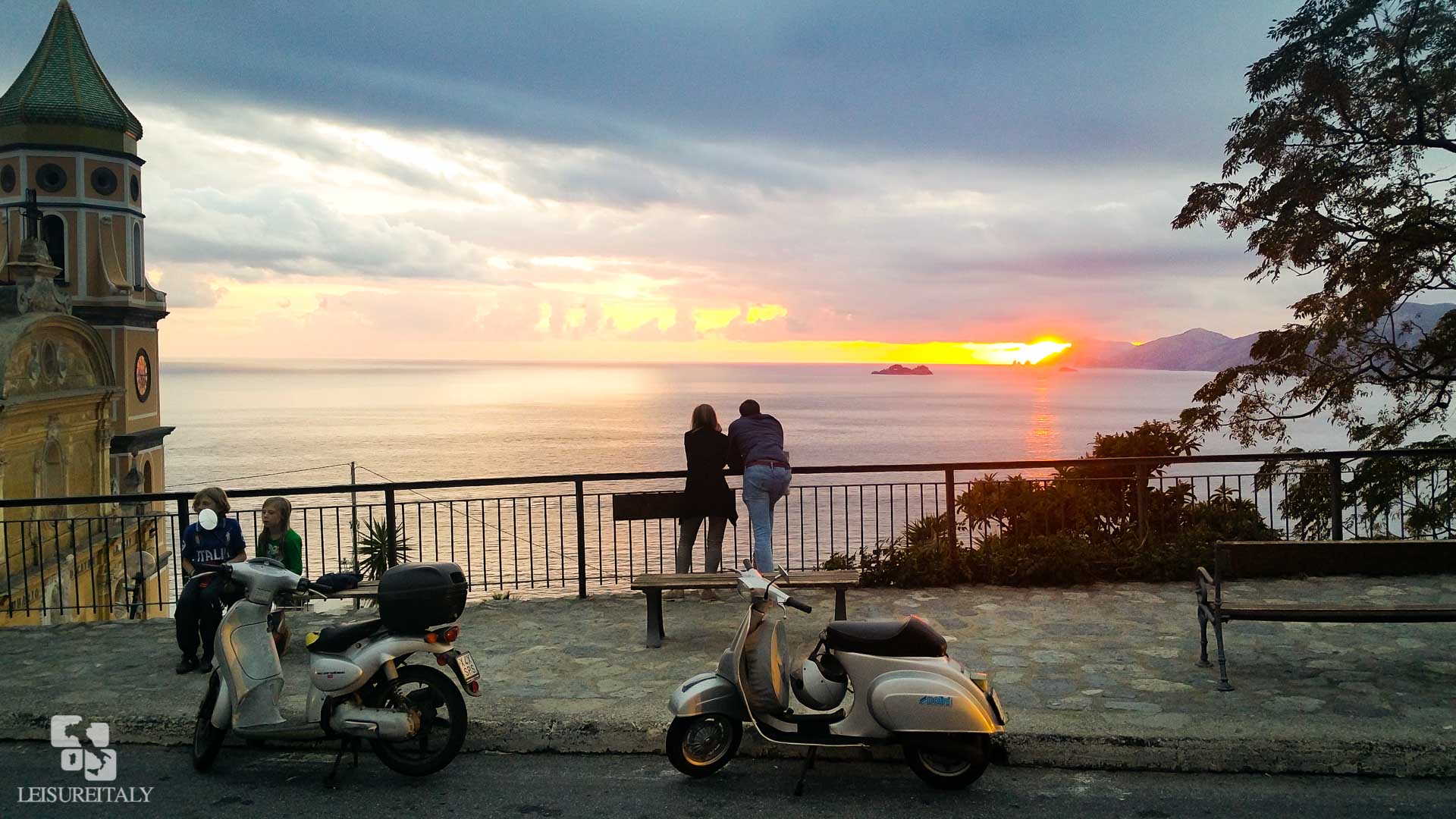
Once on the Amalfi Drive, you will experience the pure Mediterranean beauty: cliffs, blue sea, Mediterranean flora, and light blue sky. A few luxurious villas perched like eagles’ nests atop the surrounding mountains. What about the incredibly narrow winding road stretching along the coast? One is surrounded by breathtaking scenery.
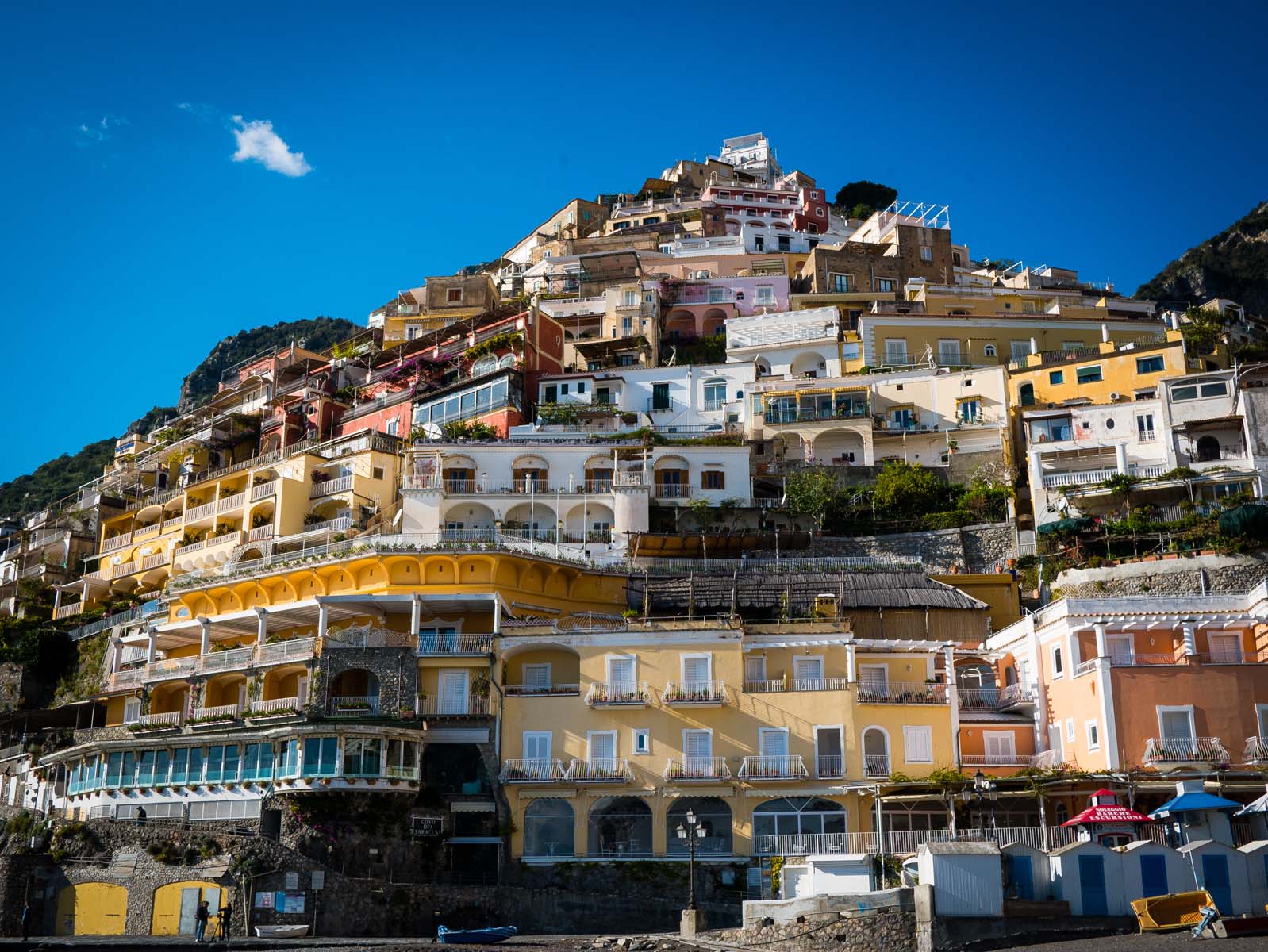
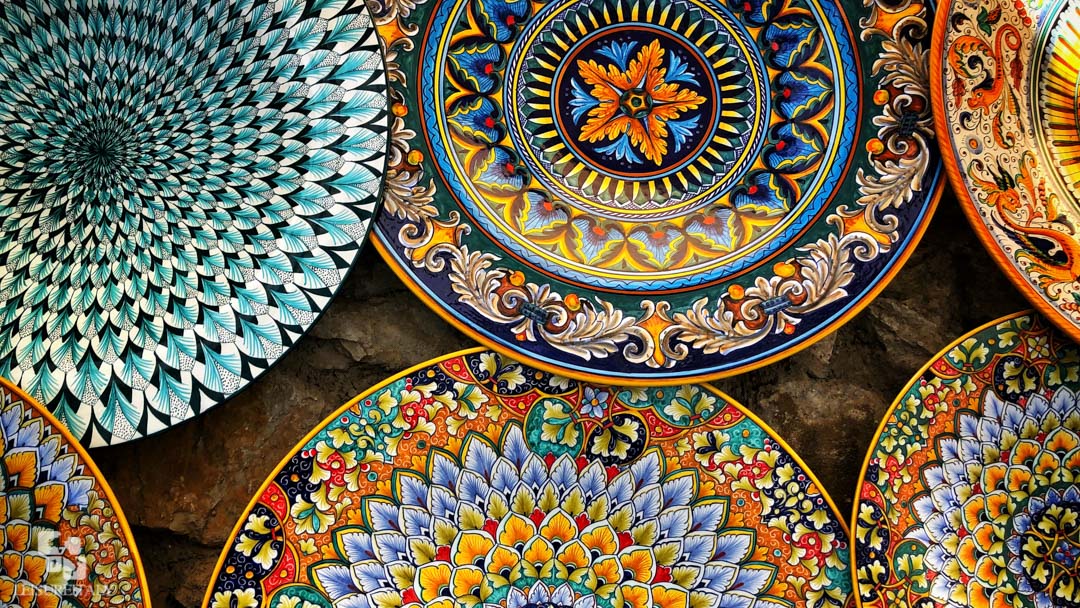
Positano is the first village you will cross along the Amalfi Coast. Its colourful houses, breathtaking landscape, art and ceramic galleries, attract thousands of travellers, turning it into a very touristy destination. If you like, you can leave the vehicle and discover the village. It is mostly a pedestrian area leading down to the beach.
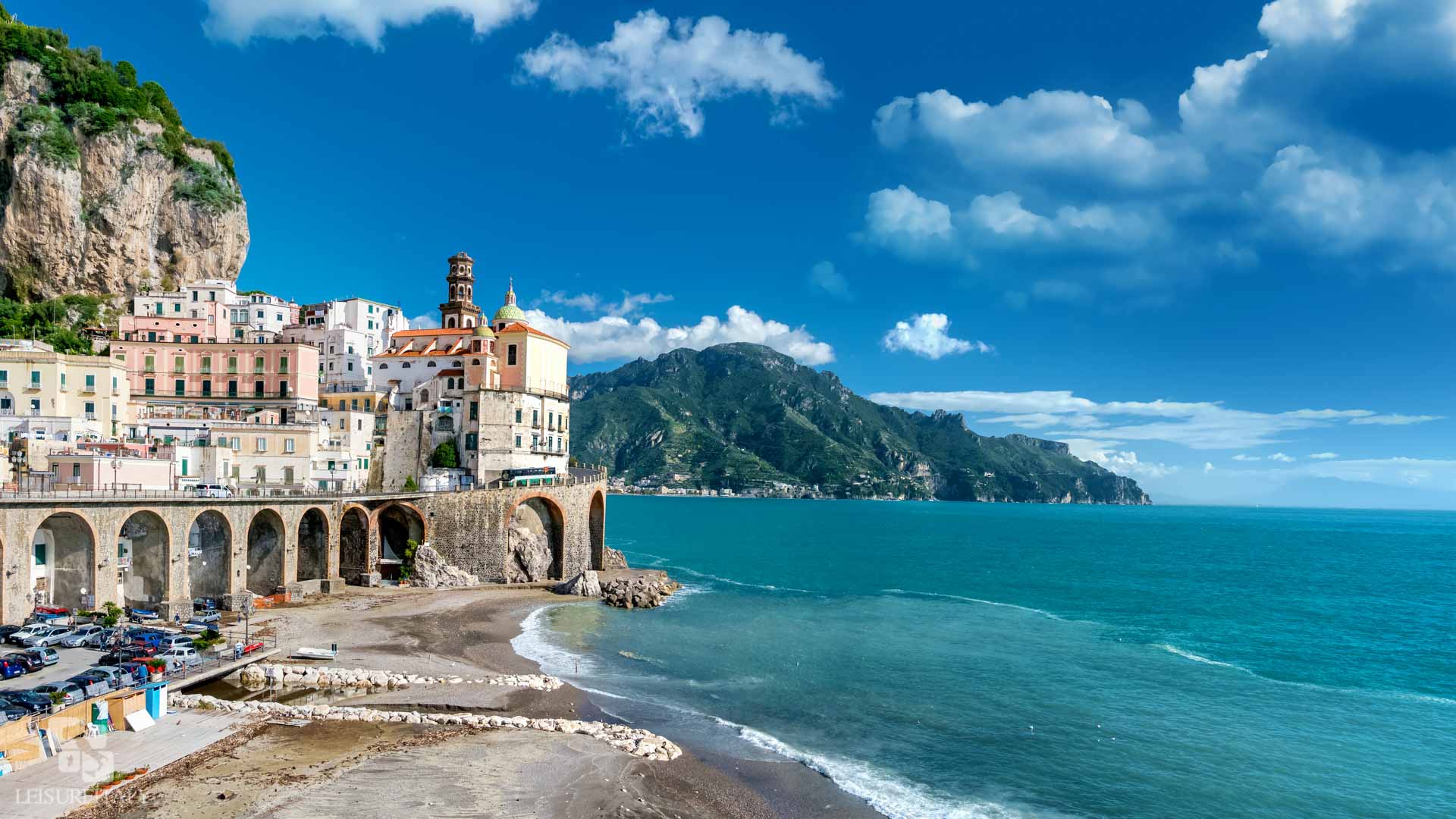
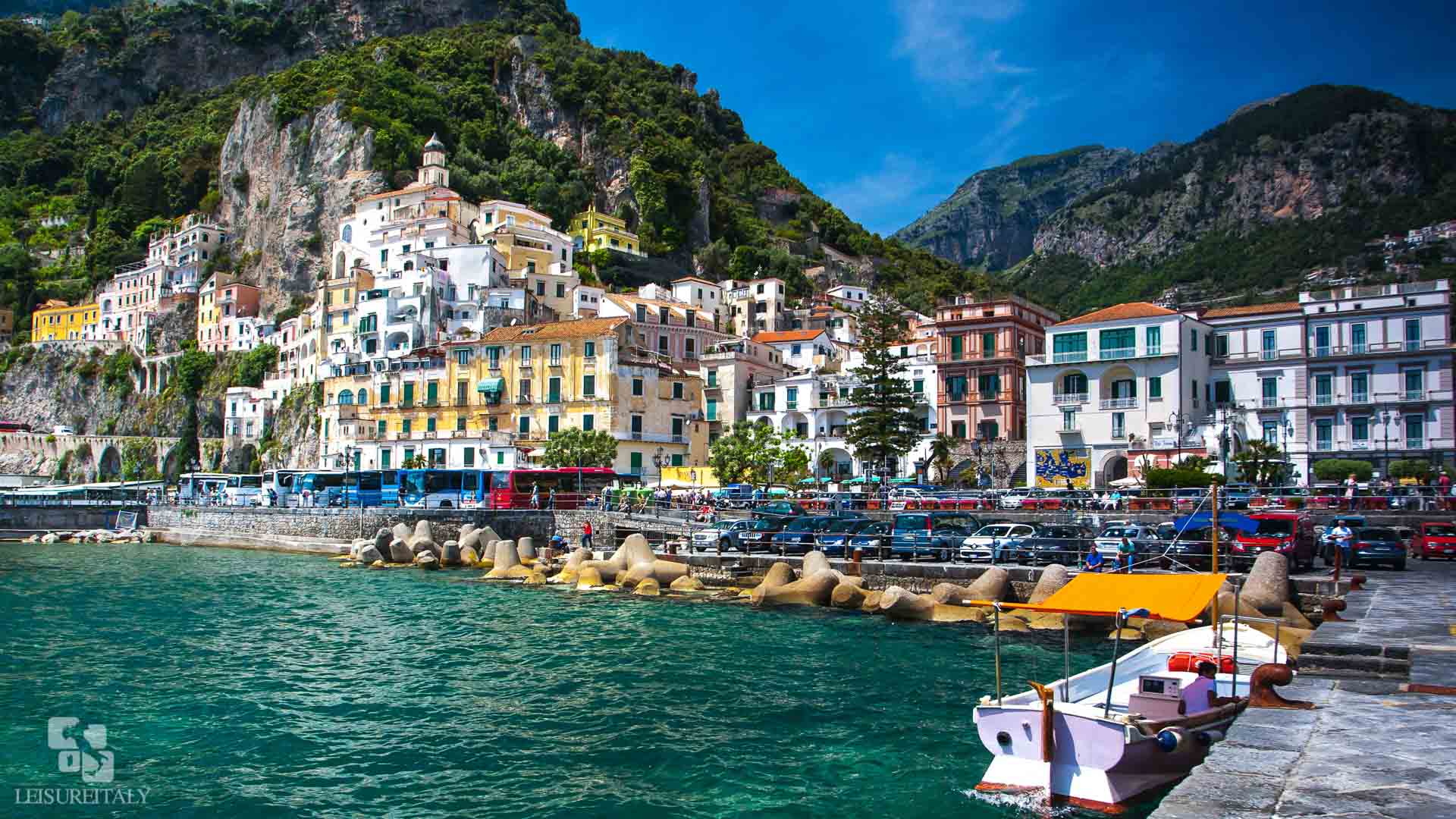
Amalfi is the most interesting place on the Amalfi coast for its glorious historical past. You can visit the Cathedral, which is the burial place of St. Andrew. You can get away from the crowds, exploring the maze of little white-painted alleys and travel back in time to the Middle Ages!
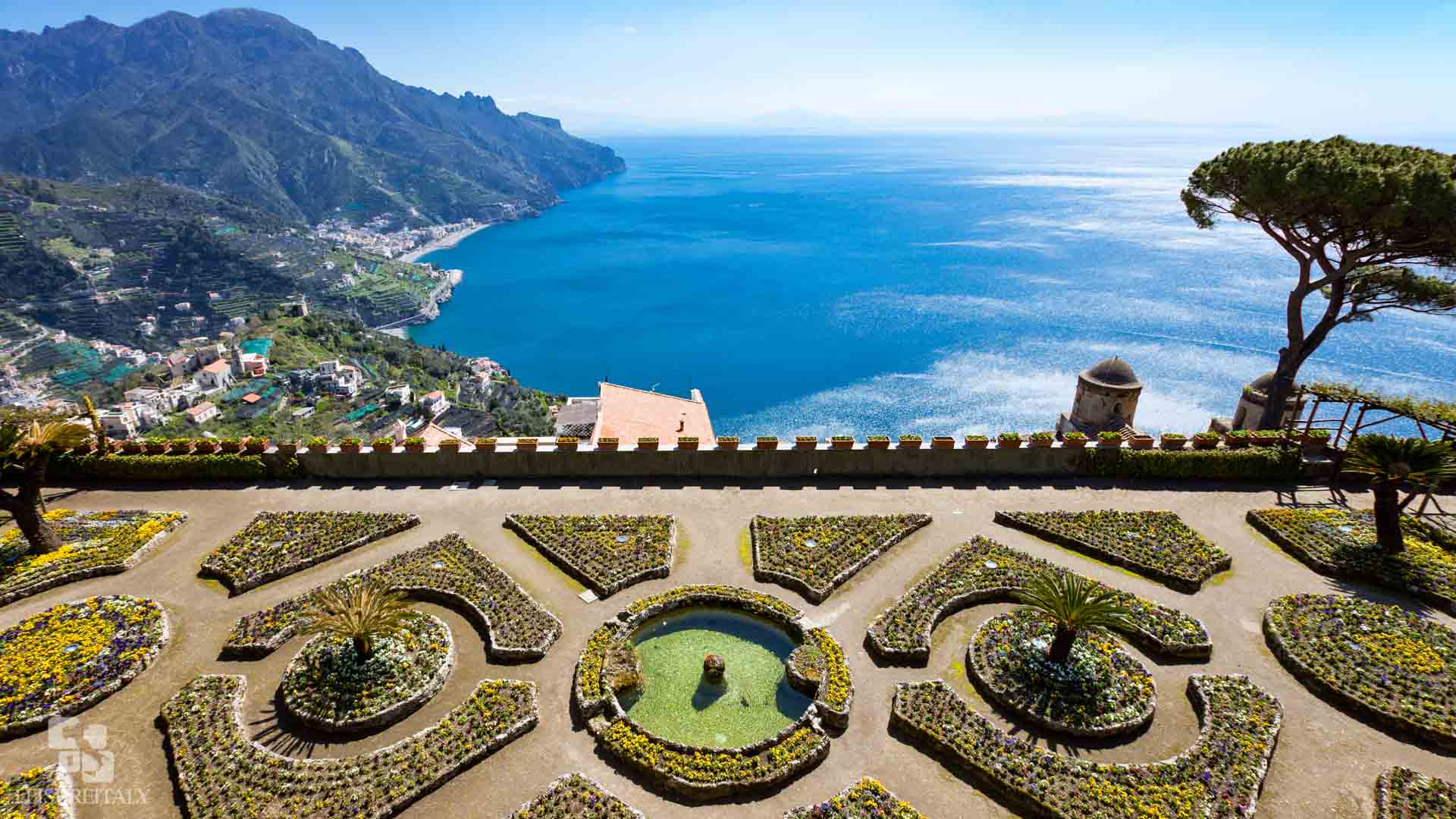
Finally, you can visit Ravello (350 meters above sea level), certainly the most elegant and scenic village on the coast. In Ravello, you can visit either Villa Cimbrone or Villa Rufolo with their astonishing views. Or simply enjoy some free time.
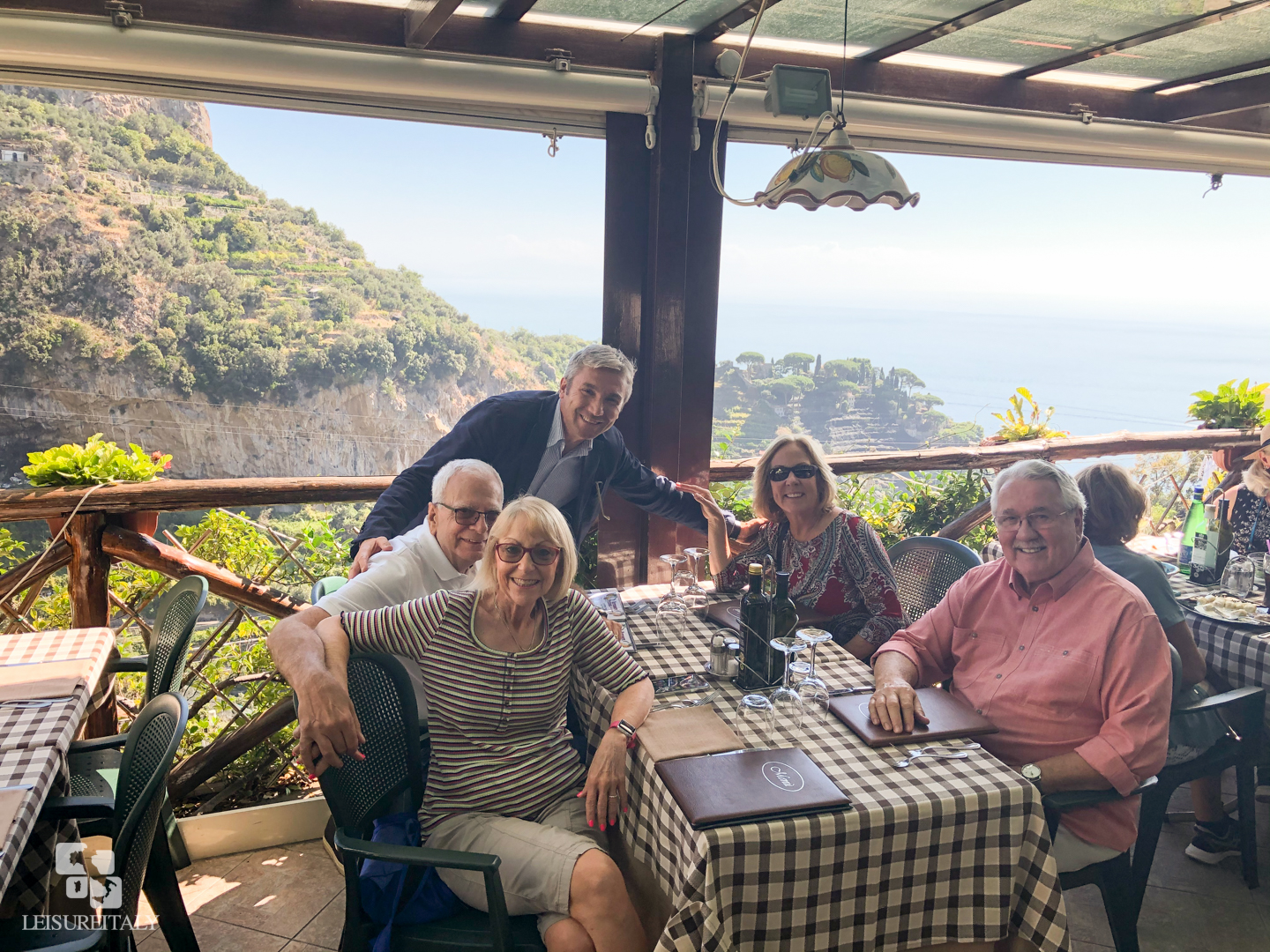
Lunch will depend on your will: there will be different options, from a snack to a nice seafood meal in one of the many excellent restaurants with a sea view along the itinerary.

Tour Reviews
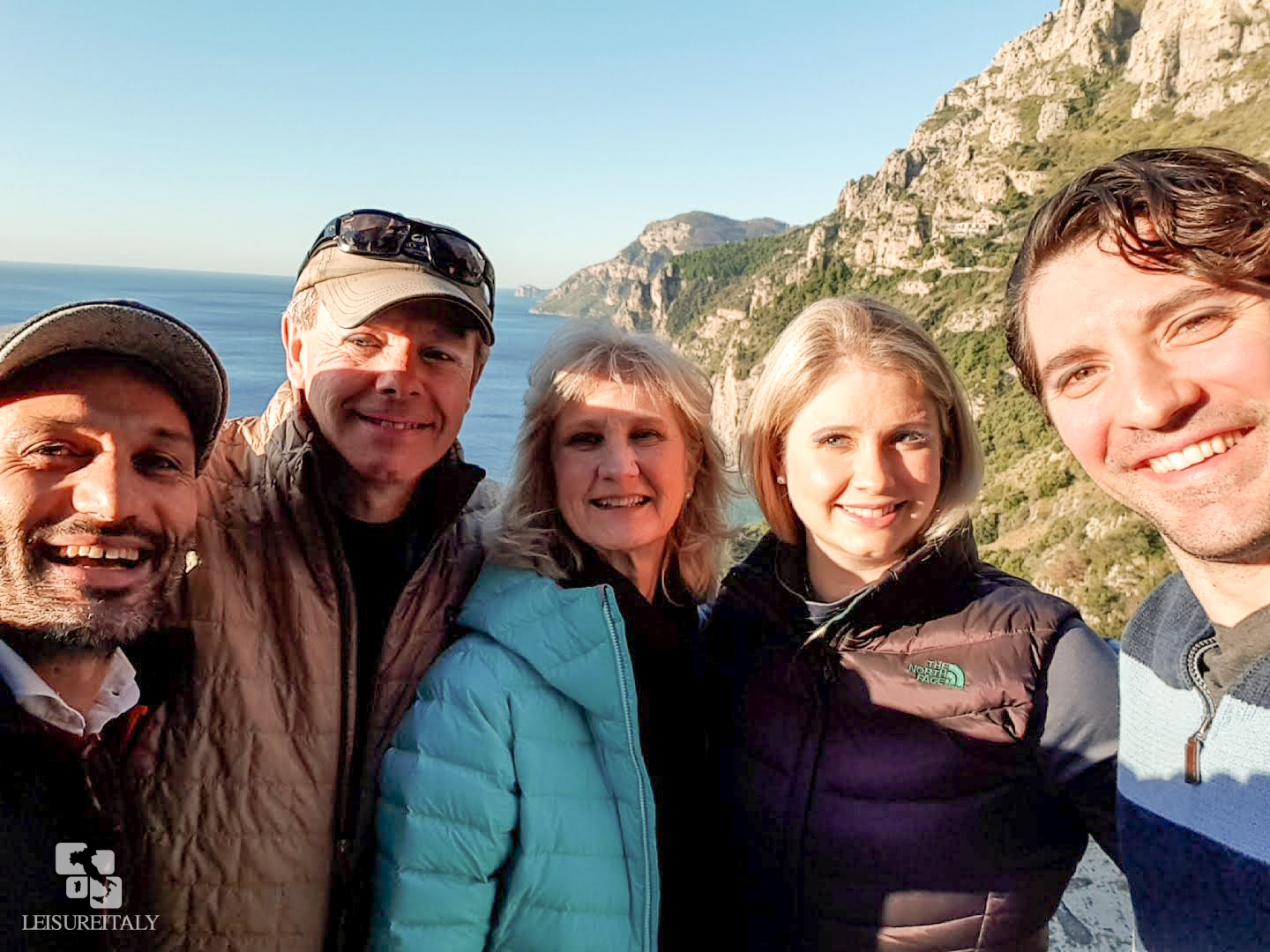
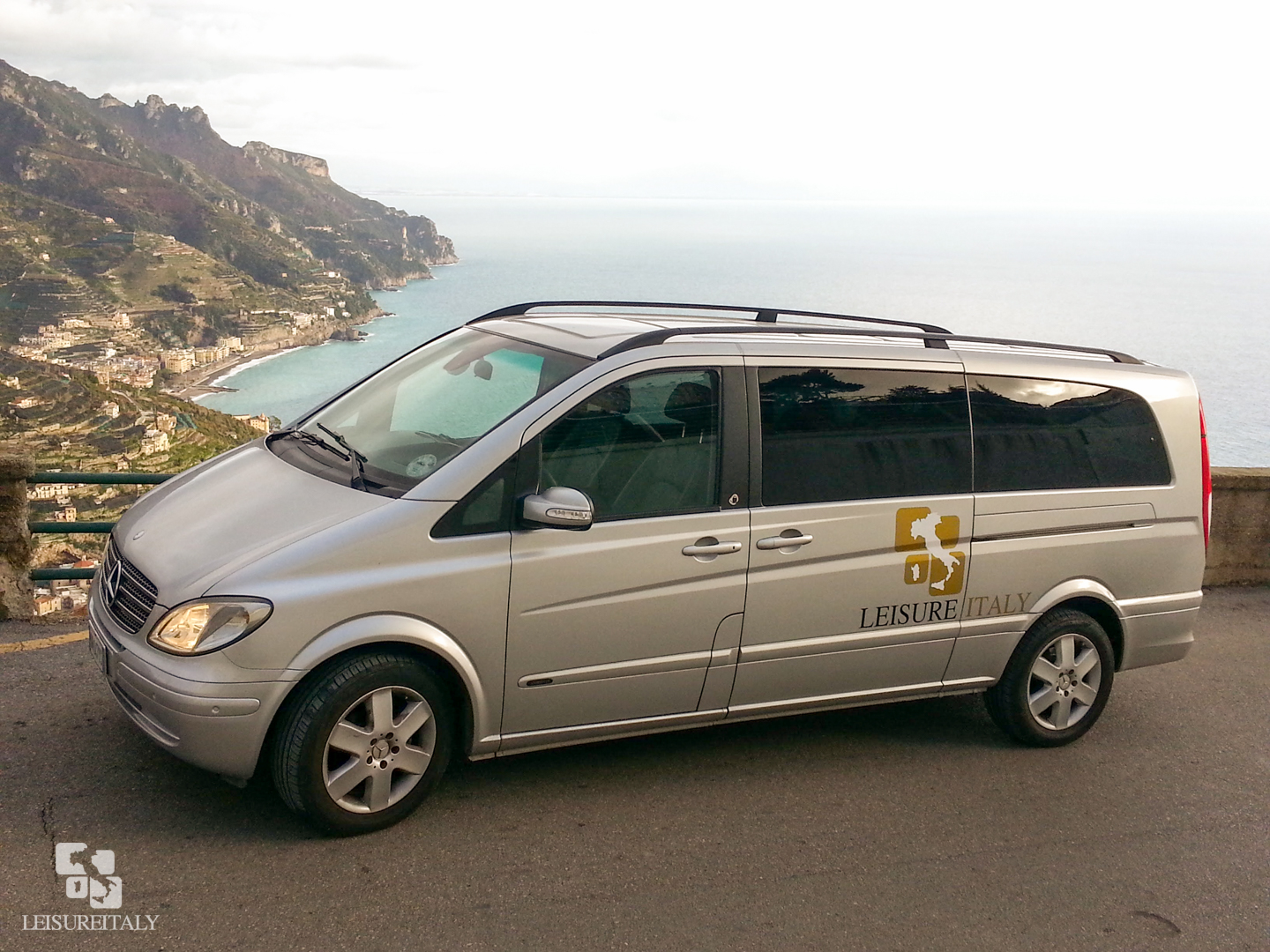
We booked our tour with Leisureitaly. Our guide was Fabrizio Bellini. We travelled with Grandma, Grandpa, Mum, Dad & our beautiful 19 month old granddaughter. It was a full day visiting Pompeii, lunch at a wonderful winery on Mount Vesuvius and finishing with a tour of Herculaneum. Highly recommend this itinerary. Our guide Fabrizio Bellini was an archaeologist of 30 years who also drove a modern five seater van with a comfortable baby seat. The knowledge, the humour and the tolerance Fabrizio imparted was so greatly accepted and appreciated. I would definitely recommend an archaeologist of Fabrizio’s standing to learn all one
Can absorb in one day. To top it off the next morning Fabrizio at my request to email kindly dropped maps delineating our tours through the ancient sites.into our hotel. What service! A million thanks Fabrizio. As we say in Australia “ On Ya”
Right from the very start of researching and then booking our tour, Giuseppe was fantastic and accommodating! He customized our tour based on our wishes taking us to small towns along the Amalfi Coast beautiful churches and a fantastic restaurant off the beaten path called Zio Peppe in Scala. We were a group of ten, so he arranged for another another driver, Gino, who was also great and knowledgeable. After lunch and a stop in Ravello our group split, half of us going to Pompeii and the rest continuing to tour the coastal towns. We went to Pompeii with Giuseppe, where he guided us expertly thru the ruins. Giuseppe is the best tour guide – do not hesitate to book him on your next trip to Amalfi or Rome!