Guided Walking Tour
The Excavations of Pompeii are too big to be visited entirely in one day. Our guided walking tour aims to visit an example for each building type, to have an overview of the ancient Pompeii and of the Roman World at that time. Your private guide will tune to your pace and energy.
The Pompeii site extends on a surface of approximately 160 acres. To make the best of your time, Leisure Italy offers qualified guided service.
The following is a suggested itinerary for our private guided walking tour: let us know would there be any special request!
In Pompeii, you will first admire the city walls, dating back to the pre-roman Pompeii (4/5 centuries BC). One of the best-preserved ancient gates is called Porta Marina. It connected Pompeii with its port, with a path for charts and one for people.
Once in town, you will be walking on the original road made of volcanic stone. You will notice on the ground hundreds of little white spots made of travertine used to reflect torchlight (nowadays “cat’s eye” on the driving roads).
Your attention will be captured by big blocks of basalt emerging from the road: they were stepping stones used by pedestrians to avoid getting wet when it rained; in fact, unlike other Roman towns, Pompeii didn’t have a complete sewer system because the city was built on top of a lava platform that was too hard to work with.
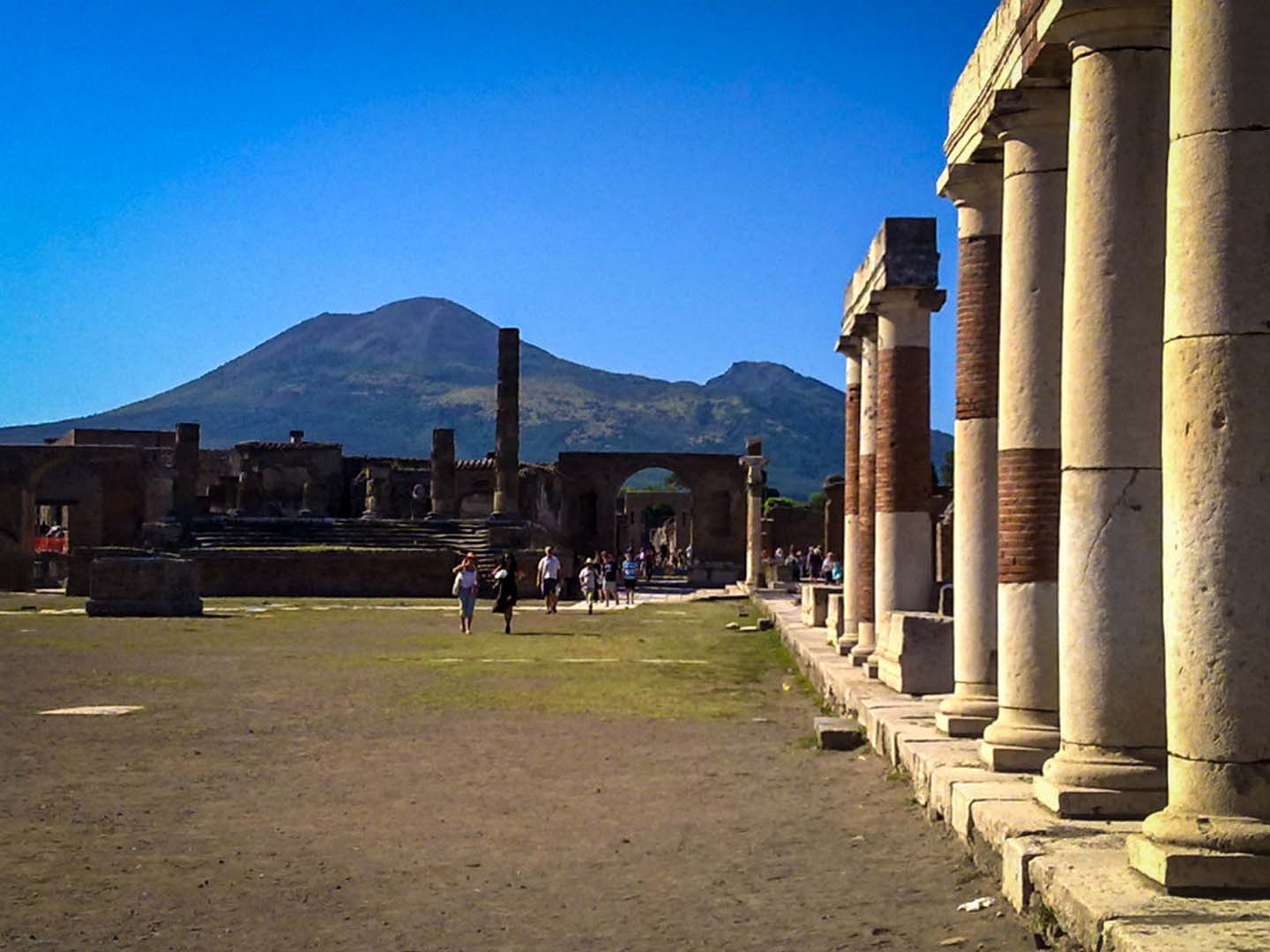
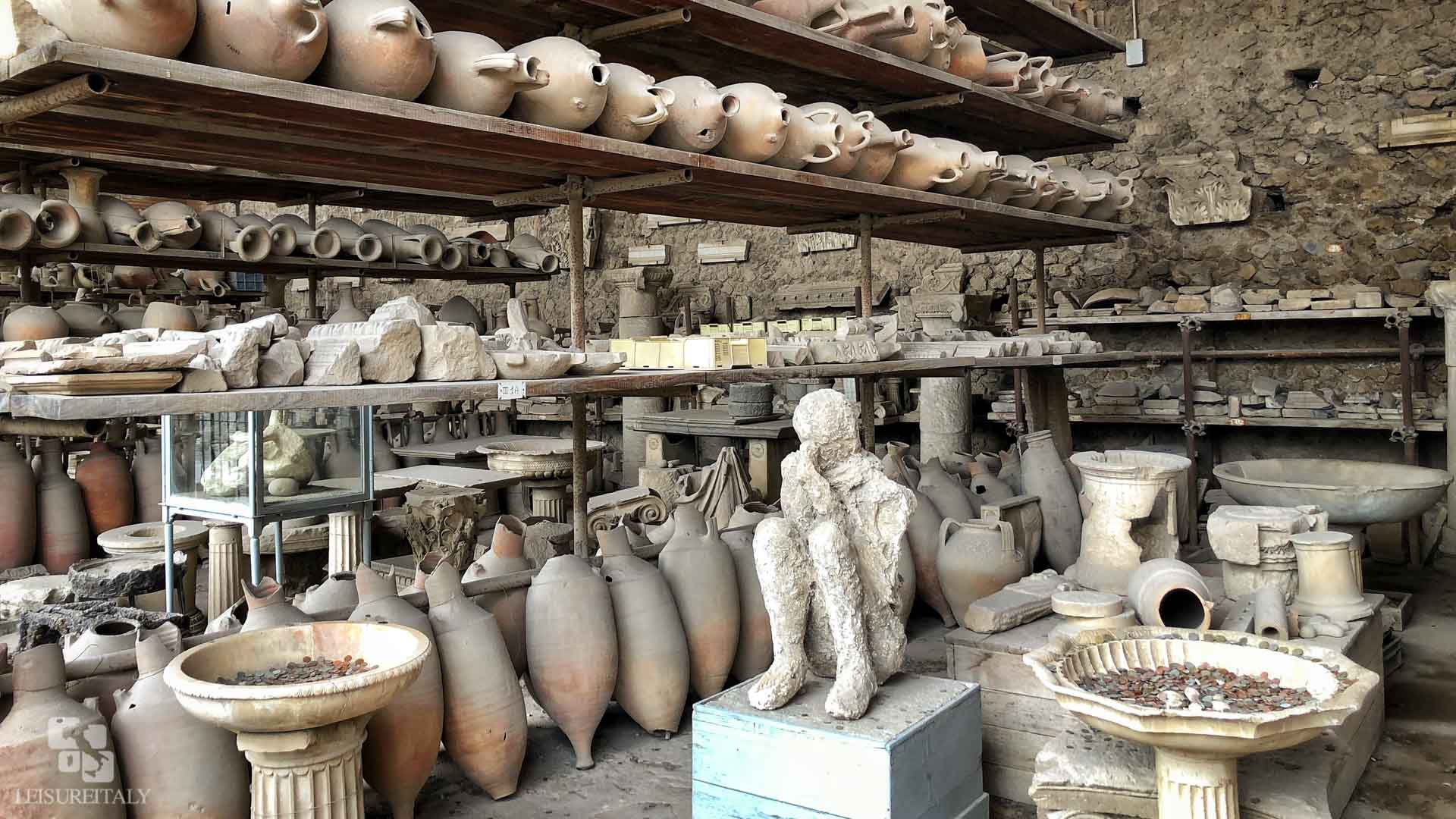
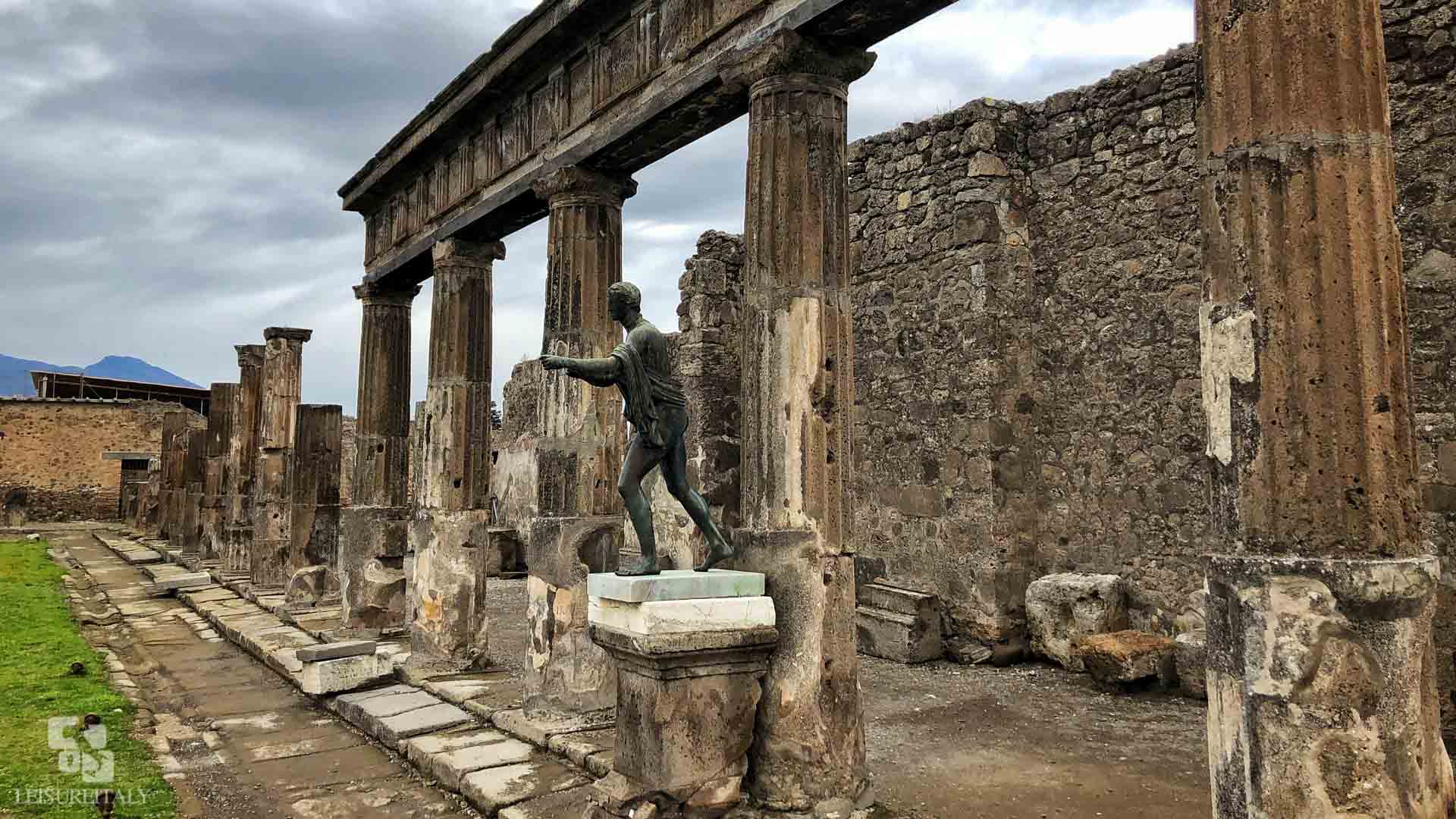
The city centre is called Forum. It hosts all the buildings with a public function: Religion (the Temple of Apollo, the Capitolium and the Temple of the Emperor), Trade (the meat and fish market called Macellum, the textiles market headed by a priestess named Eumachia), Administration (the Basilica) and Politics (Comitia). Other facilities in the Forum included exchange offices, public restrooms and a public scale (tabula mensurae) aimed at comparing and weighing farmers’ products. In the Forum, you may also see a display of the famous human casts.
Close to the Forum were public Bath-Houses where both men and women (in different sections), poor and wealthy, free persons and slaves could access daily hygiene. Pompeii had three such complexes within the city and two others right outside of it. Each Bath-House had the following facilities: a changing room (apodyterium), a tepid room (tepidarium), a hot room (calidarium) and a Gym (Palestra).
You will notice several places fronting the road with large vases built in a masonry counter: this is what the Romans called popinae, today’s inns! These jars were full of food and beverages, and many ancient Pompeians would stop in such places for lunch.
You will recognise some of the Bakeries of Pompeii, with their ovens and grinding machines: incredible but true, some round carbonised loaves of bread were found during the excavations. Remains of ancient food, such as almonds, pine cones, figs, lentils, etc, have been discovered during the excavations, but it is hardly ever on display due to preservation reasons.
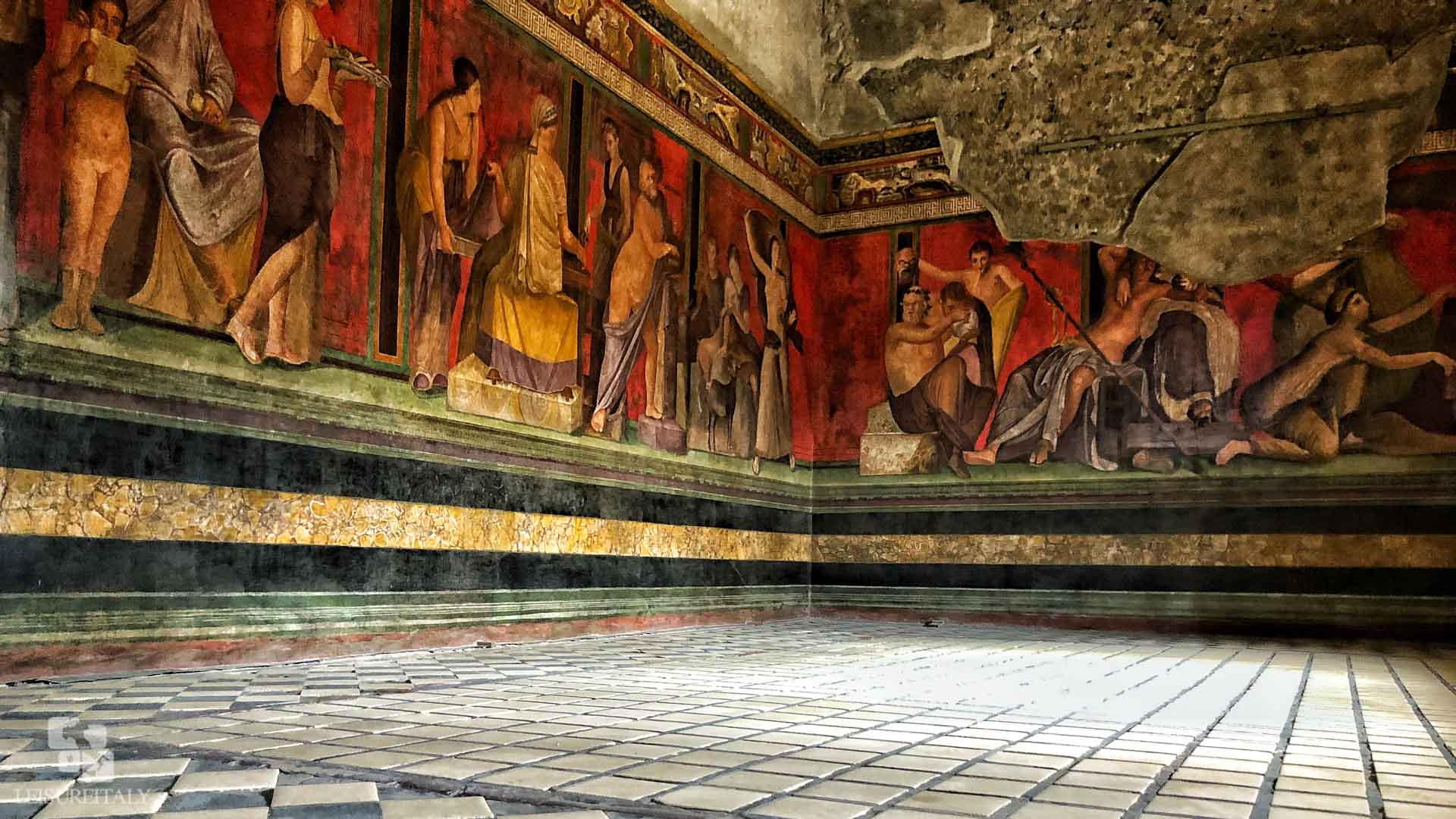
Upon request, your visit can include the infamous Lupanare (Brothel): it displays Roman frescoes featuring erotic images!
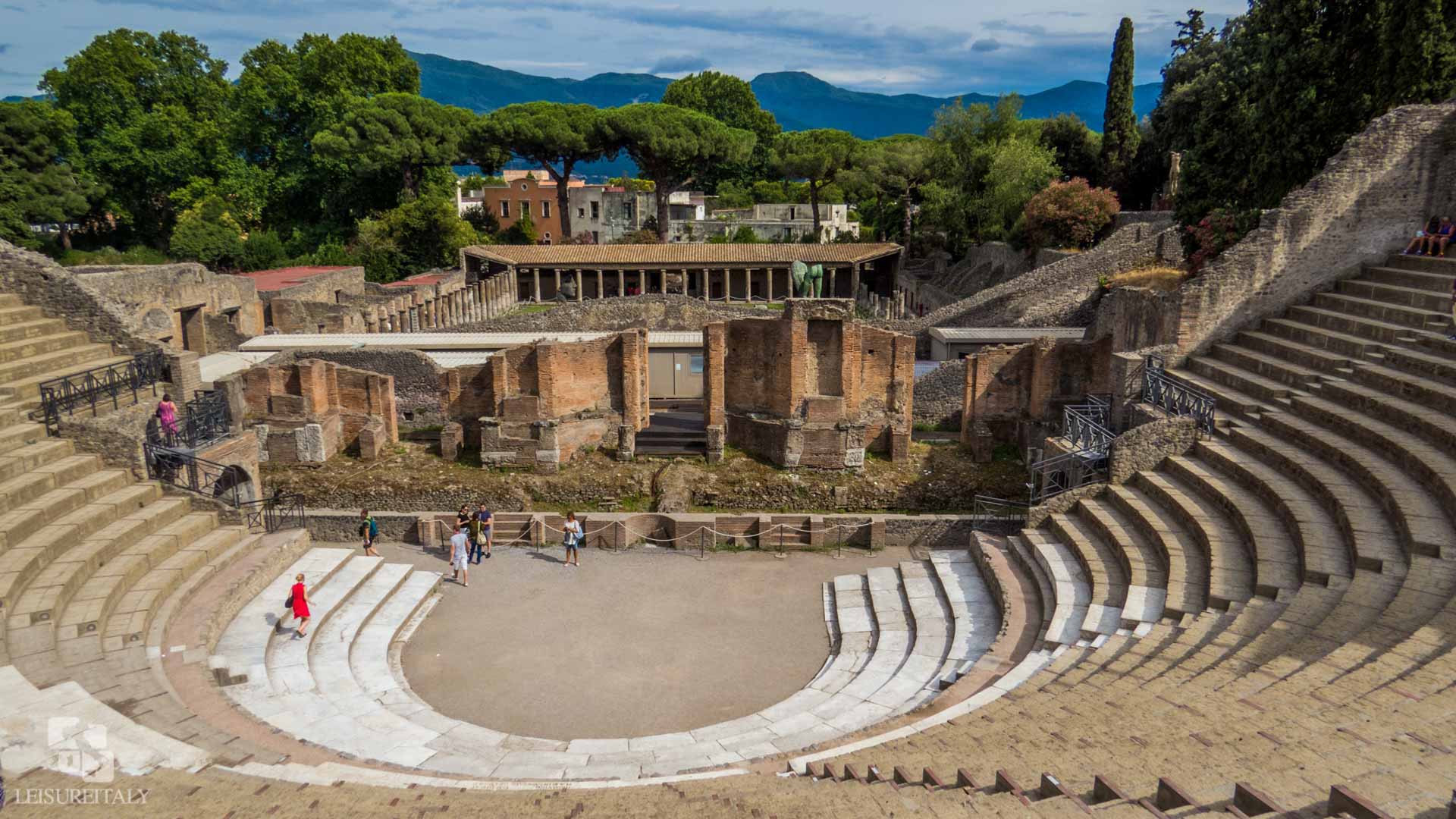
Do not miss the chance to discover Pompeii’s areas for public performances. There is an outdoor Theatre (for comedy and tragedy), an indoor theatre (Odeion, for mimes and declamation of poetry) and an amphitheatre (for games like gladiator fights or game hunting). You shall visit at least one of those places.
On request, the tour can also include the small but wonderful museum (Antiquarium), featuring finds from the excavations, as well as plaster casts made of the ancient Pompeians.
Pompeii is too big to visit entirely in a day. Leisure Italy will make sure you see the highlights.
After the tour at Pompeii, you could stop for a few minutes for a fresh-squeezed orange juice or to browse the souvenir shops if you wish.


Tour Reviews
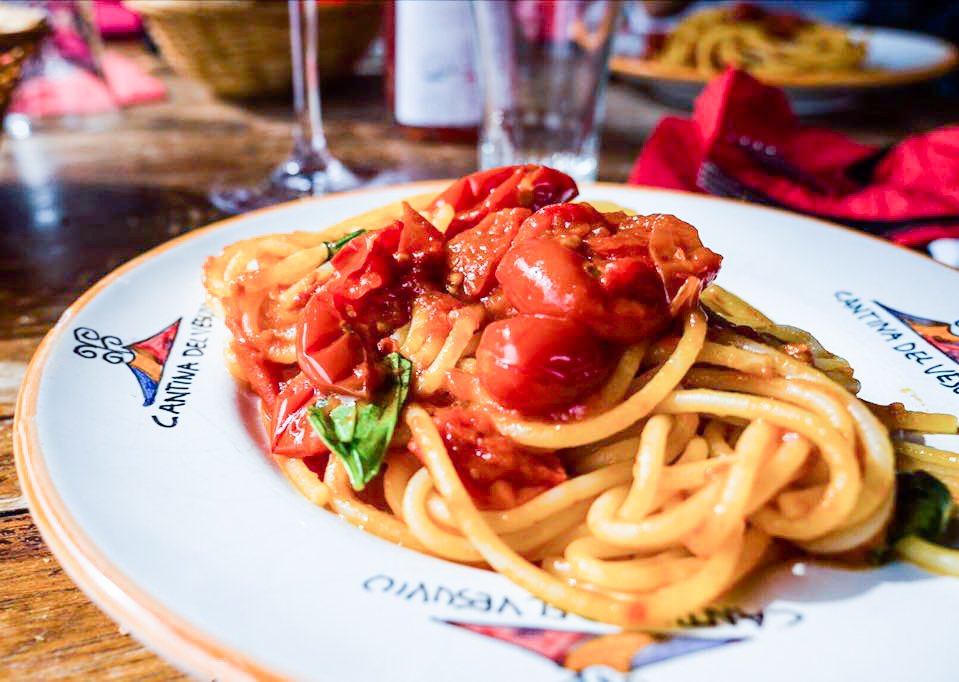
A fantastic day out. Fabrizio was amazing from the moment he collected us from the hotel. He knowledge of Pompeii and surrounding areas is outstanding. We would highly recommend this tour including the wonderful winery lunch at Mt Vesuvius